01
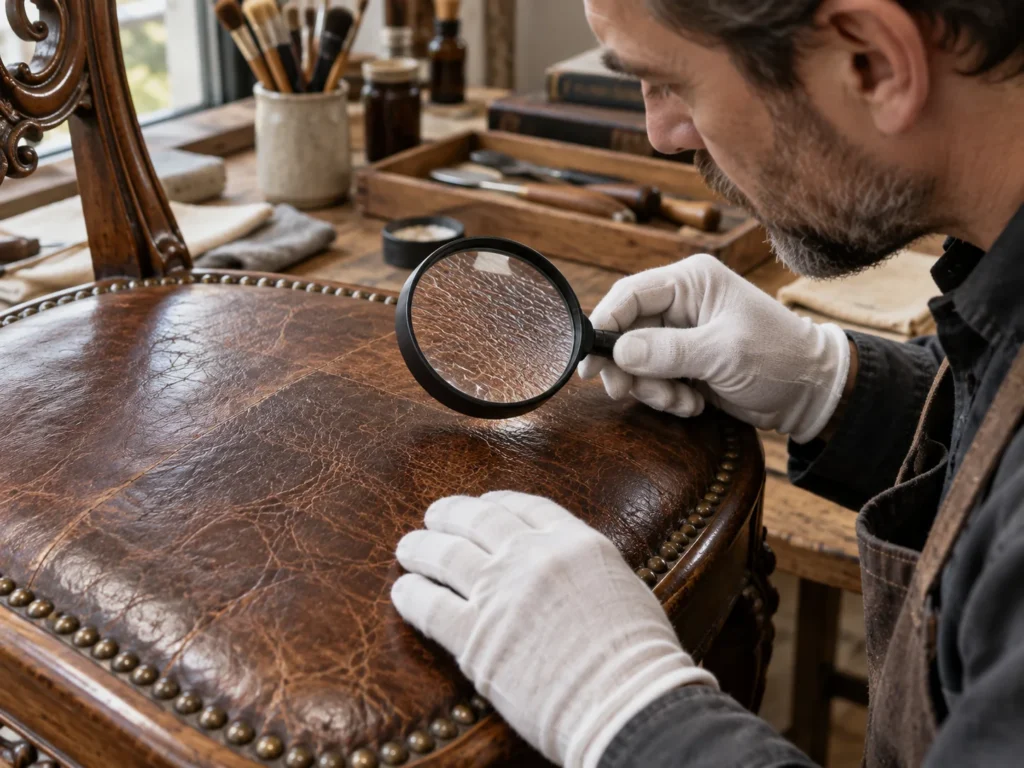
Identify the hide
Is it aniline, coated, or a later re-cover?
 Chicago
Free Estimate
Chicago
Free Estimate
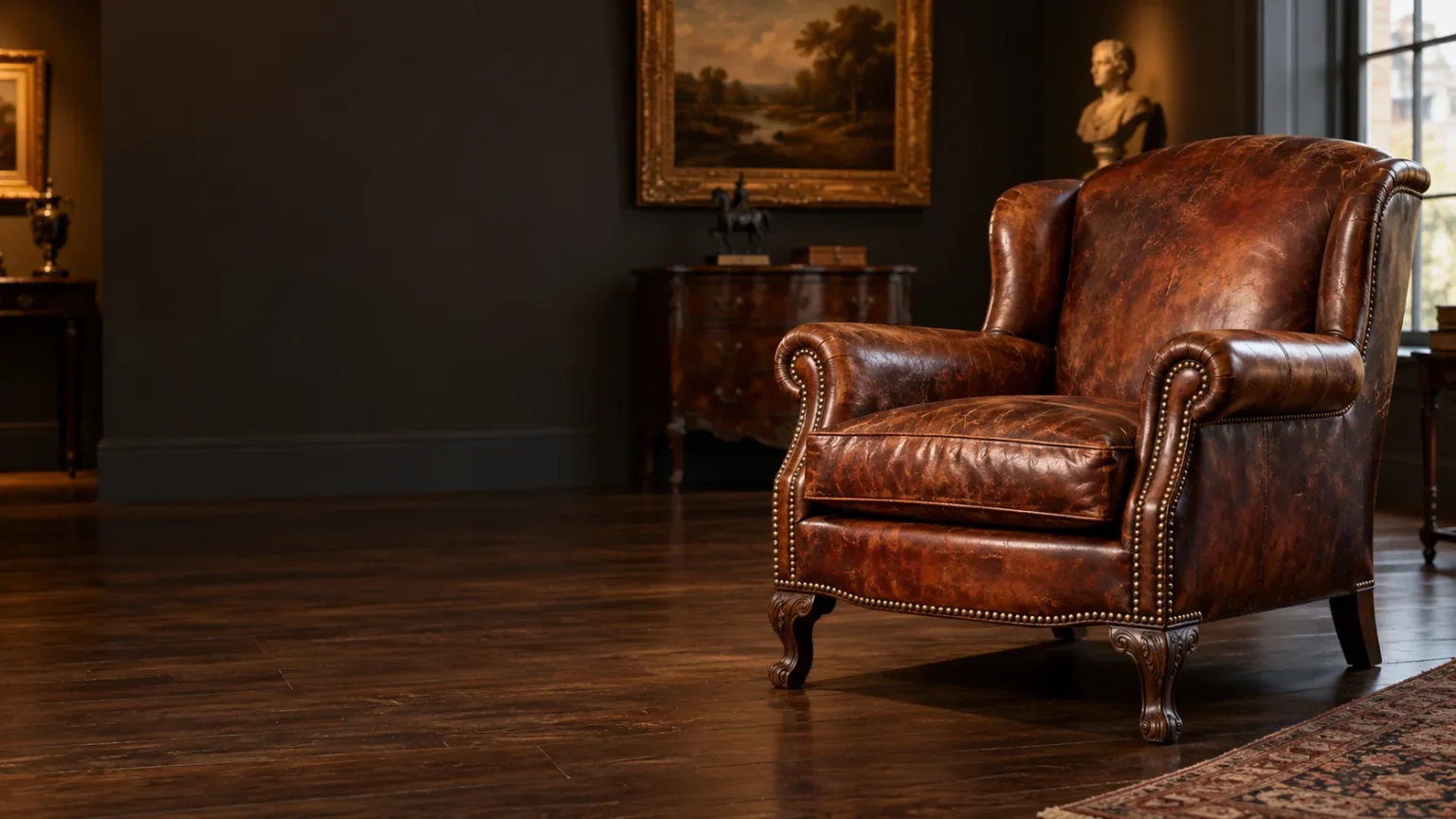
Old pieces should still look old when they leave us. We restore stock for dealers, galleries, auction houses and estate buyers, and we stop before the work starts costing you money.
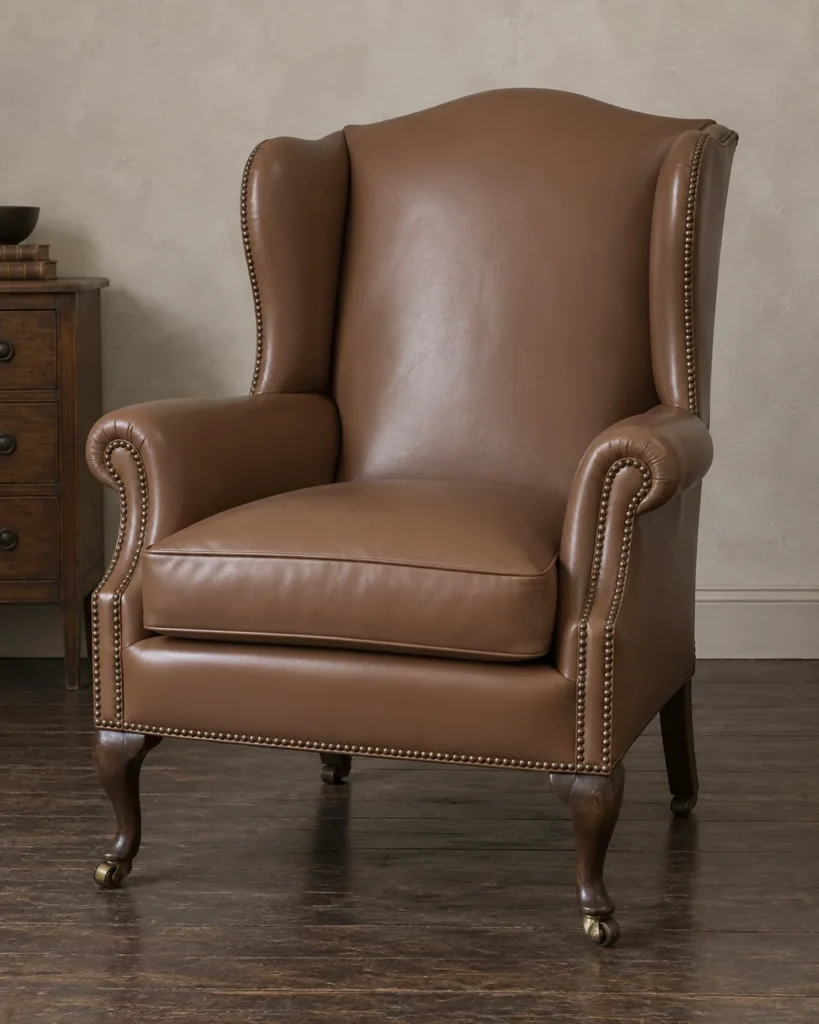
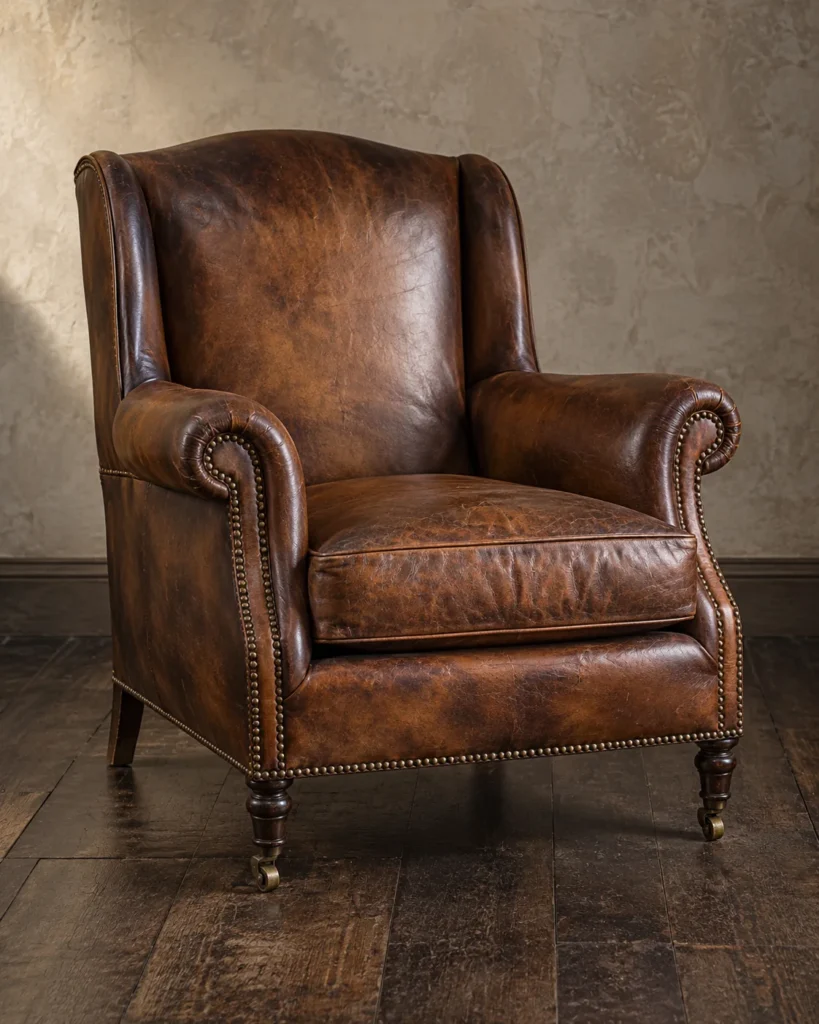
Buyers of old furniture are paying for age. Antique furniture restoration Chicago dealers can rely on treats that age as stock, not as a fault, and protects it first.
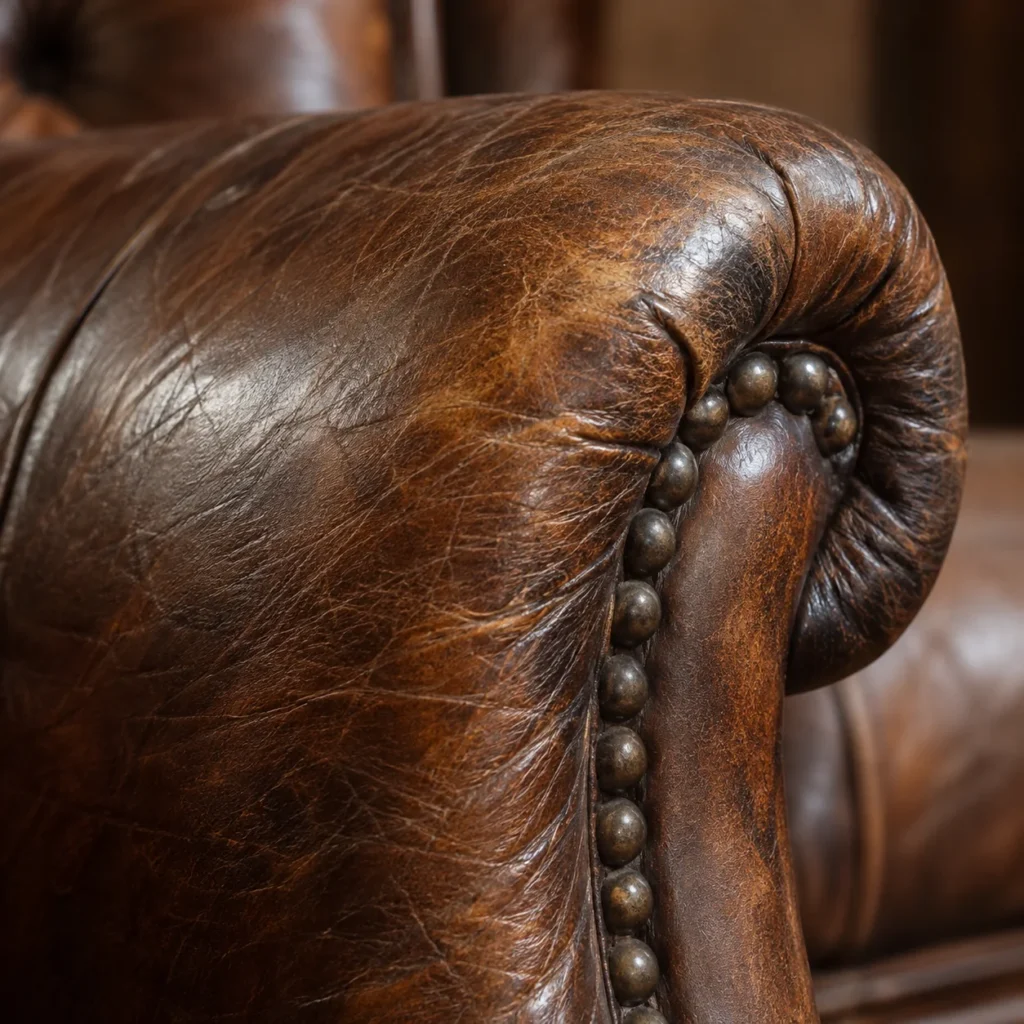
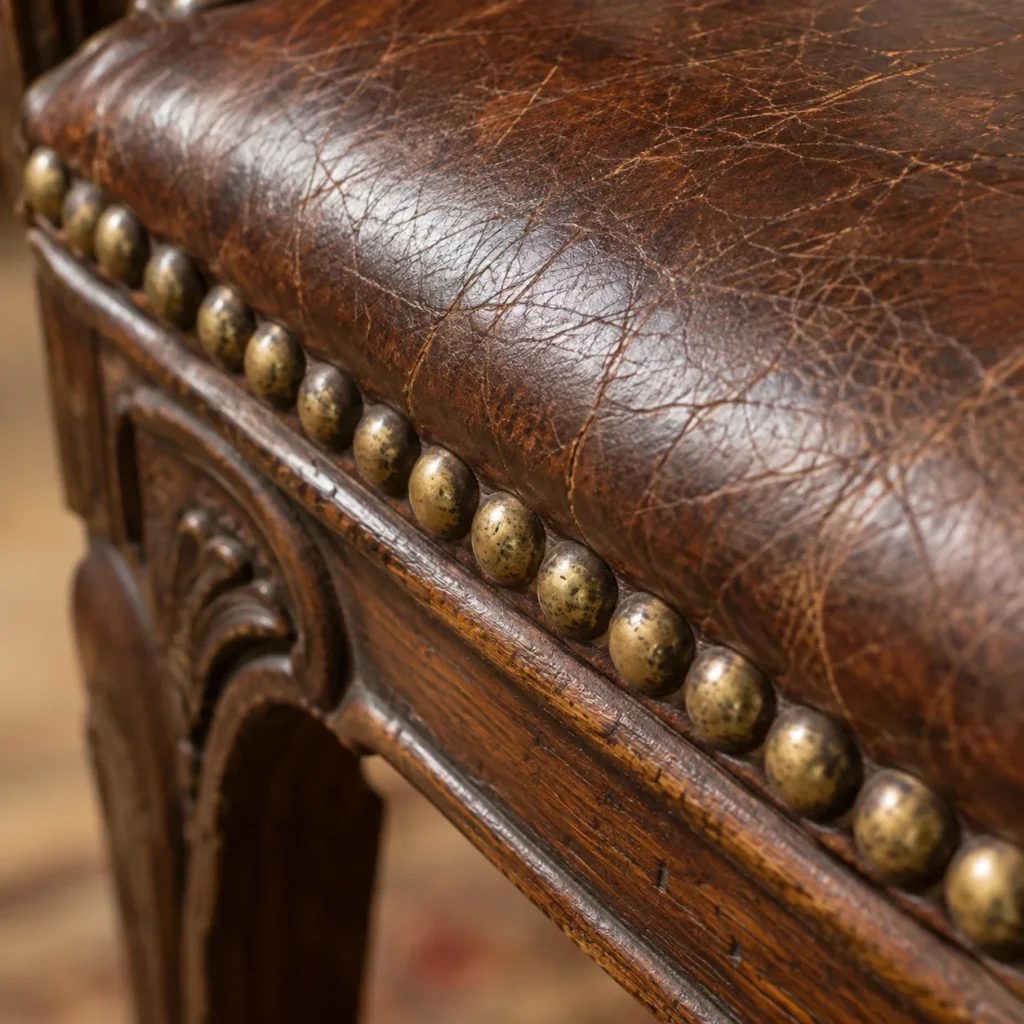
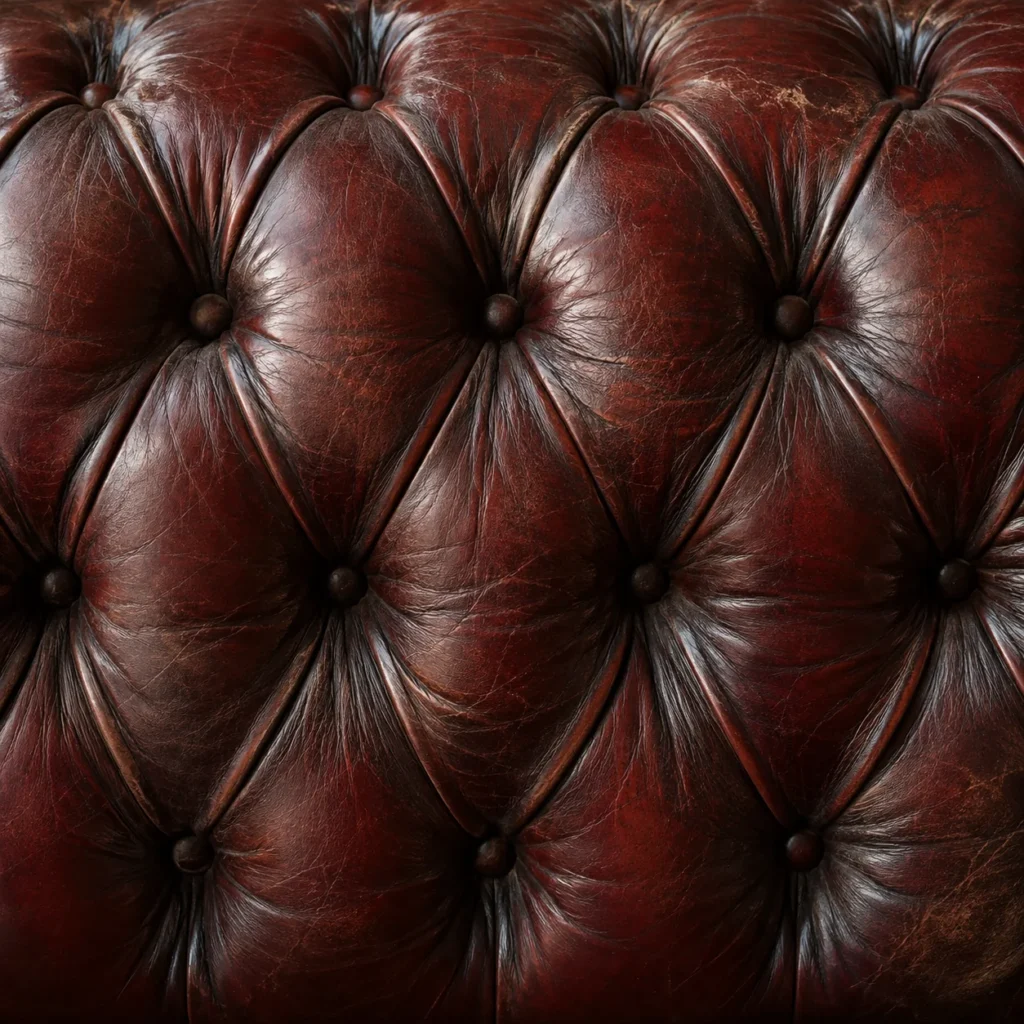
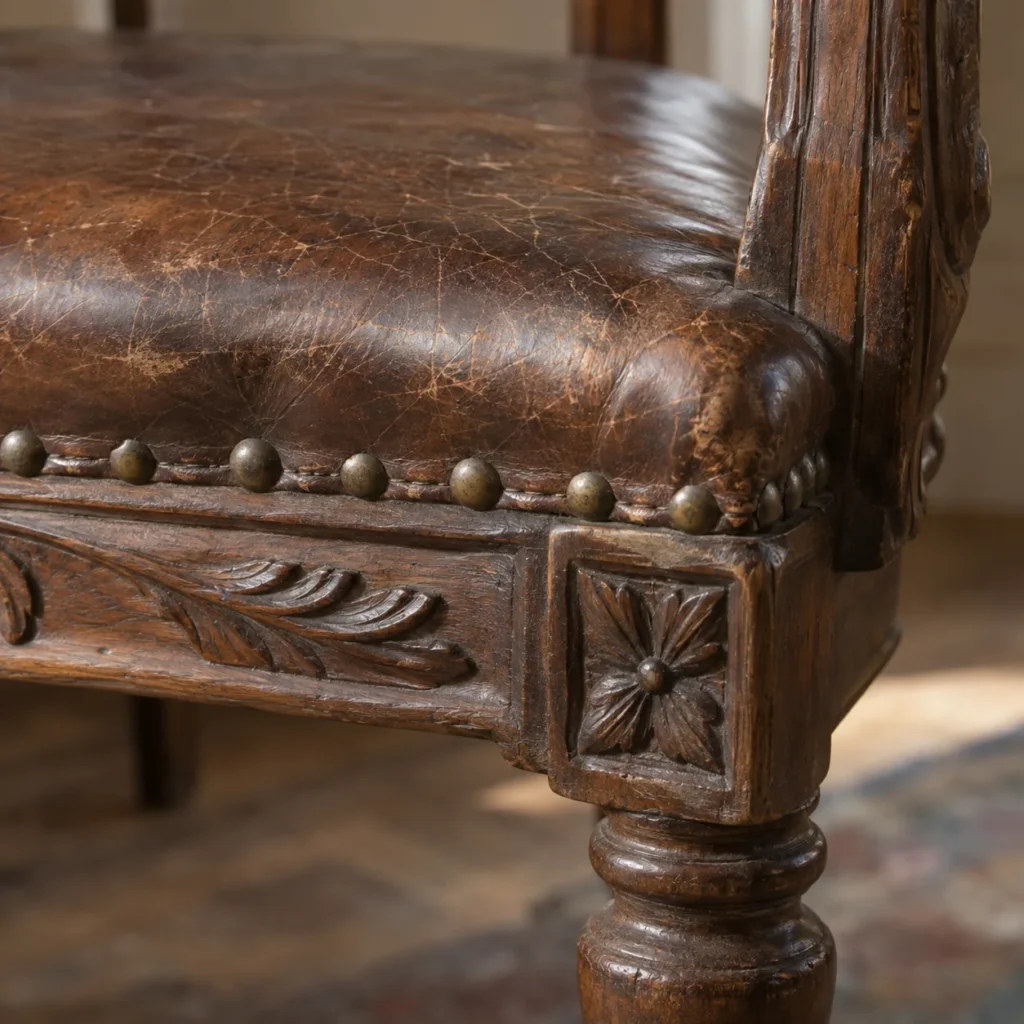
Often the job ends early: a good clean can be the whole restoration.
Is it aniline, coated, or a later re-cover?
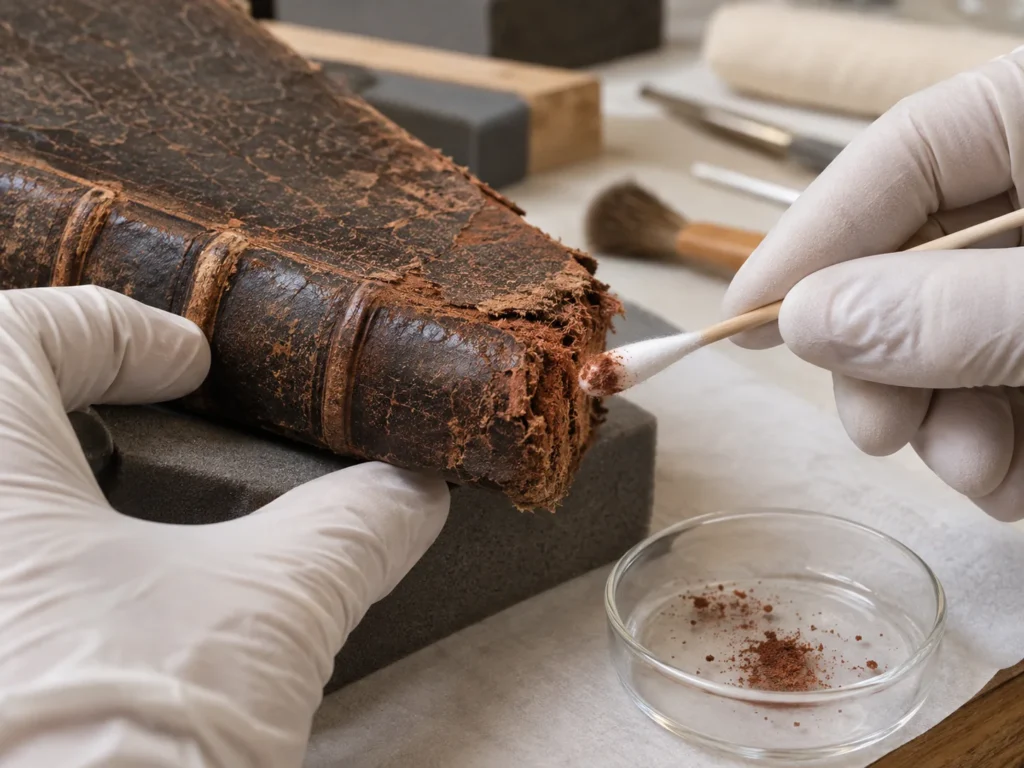
A swab tells us about red rot before any liquid touches it.
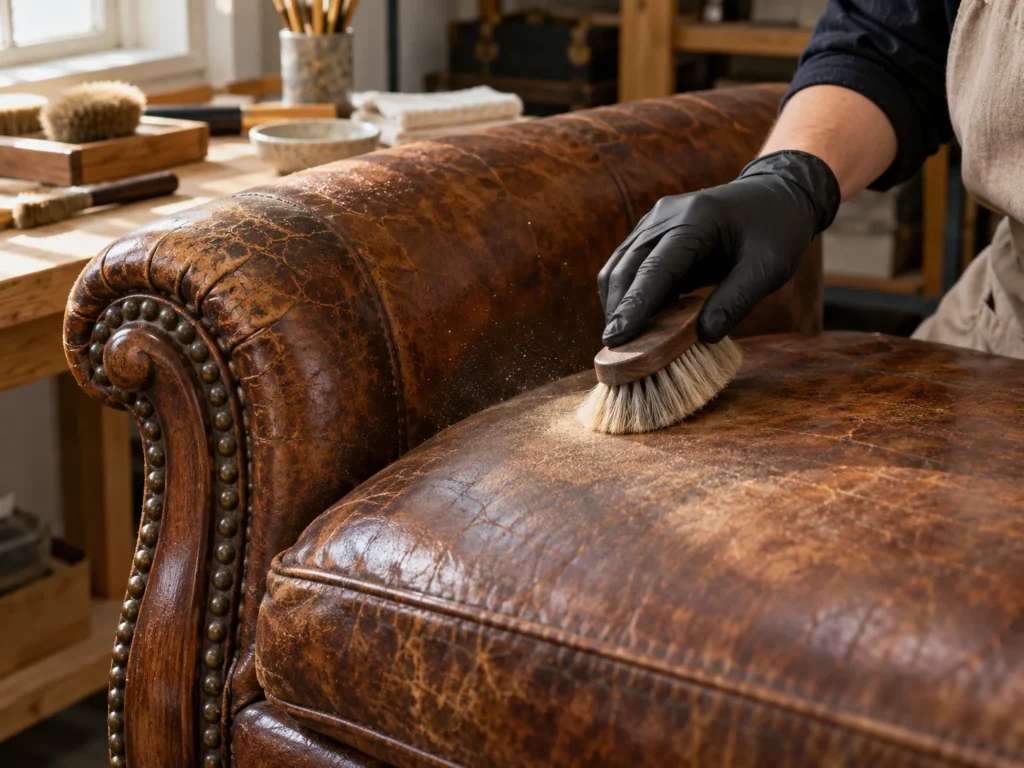
Grime goes first, and much of what looked like damage leaves with it.
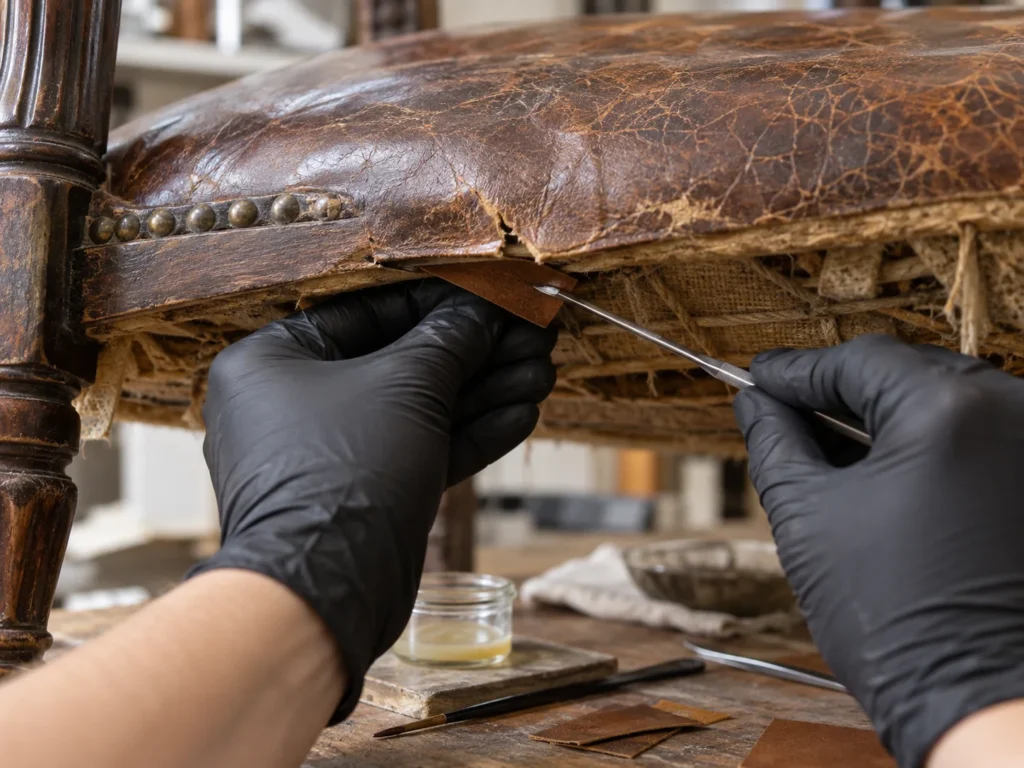
Splits supported from underneath, missing areas built back.
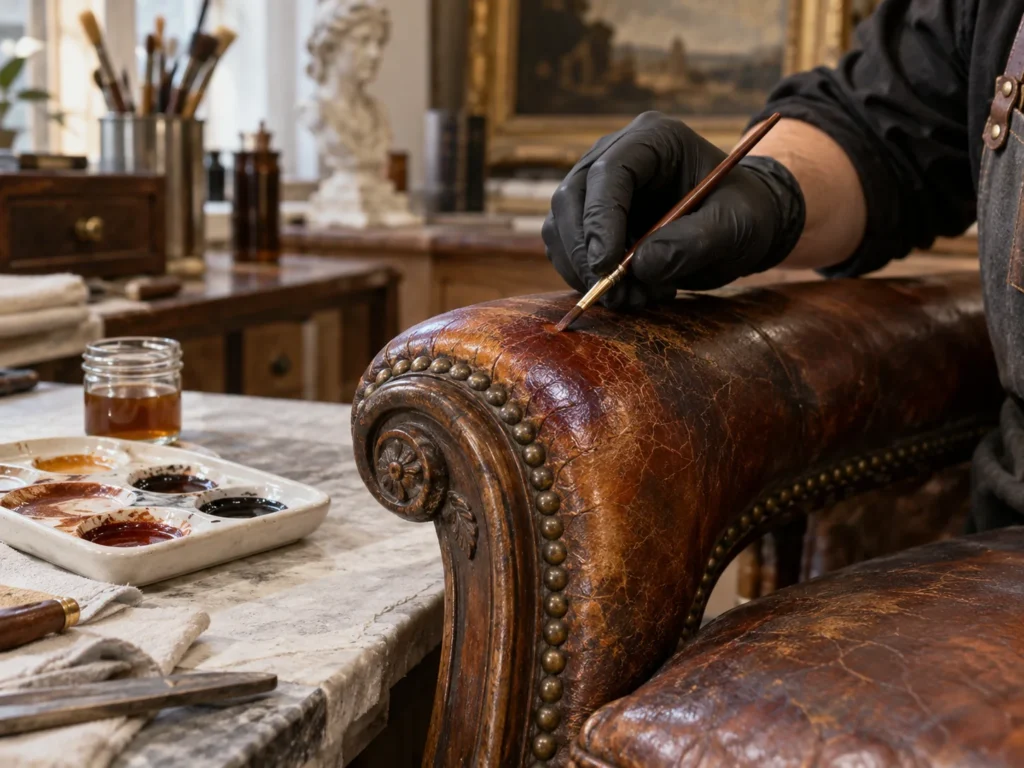
Sheer layers blended into the old color next to them.
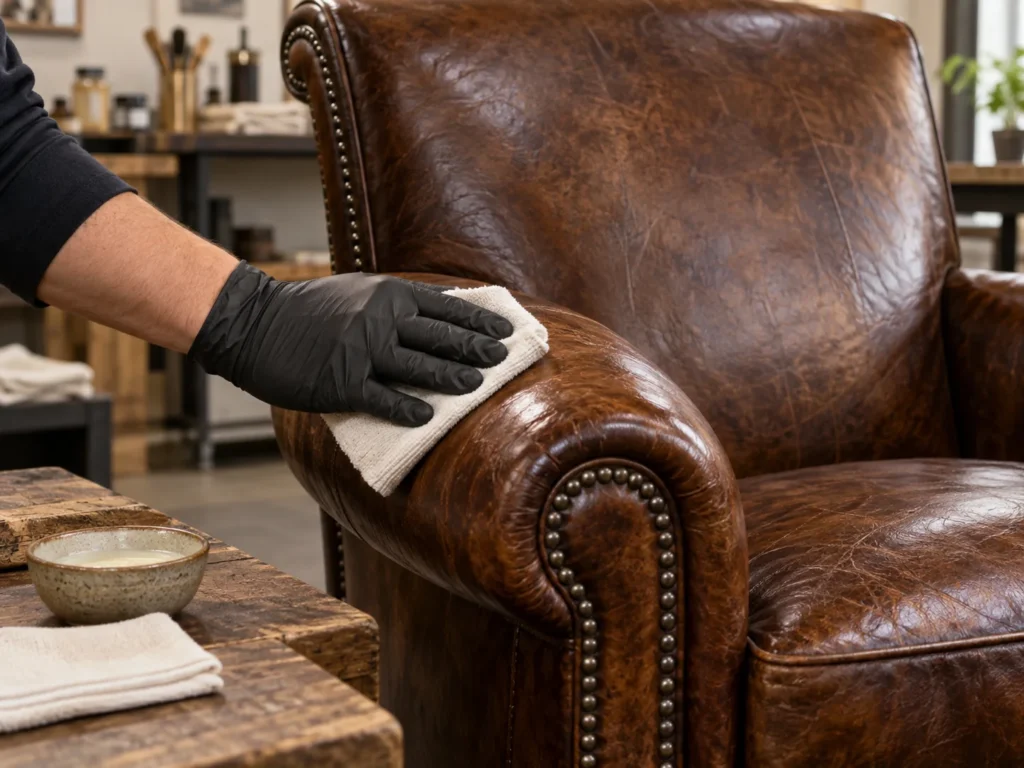
Nourished slowly, then finished to a sheen that suits its era.
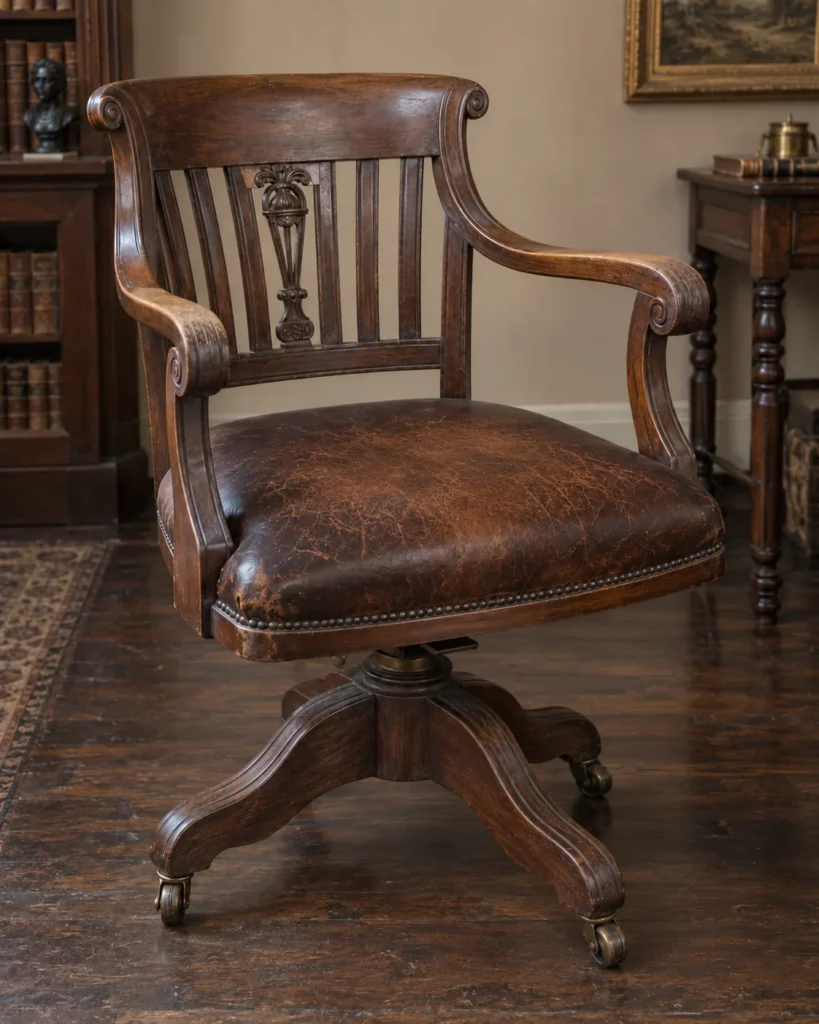
Two typical shop pieces. More in the before and after gallery.
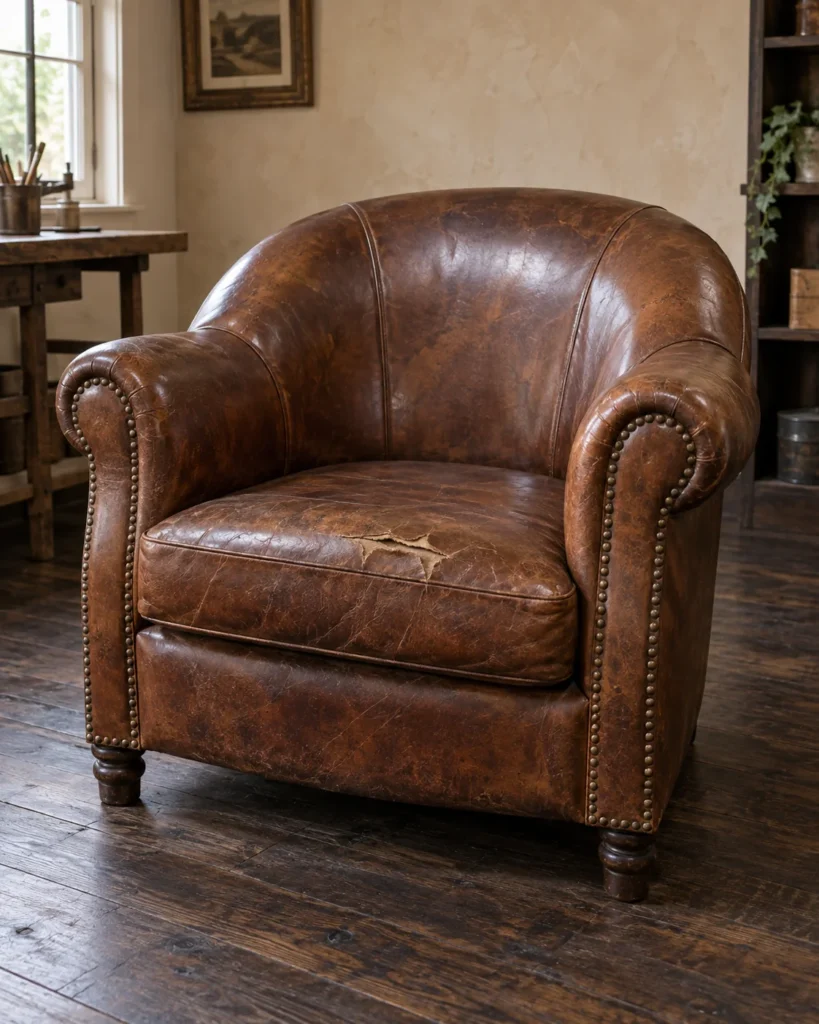
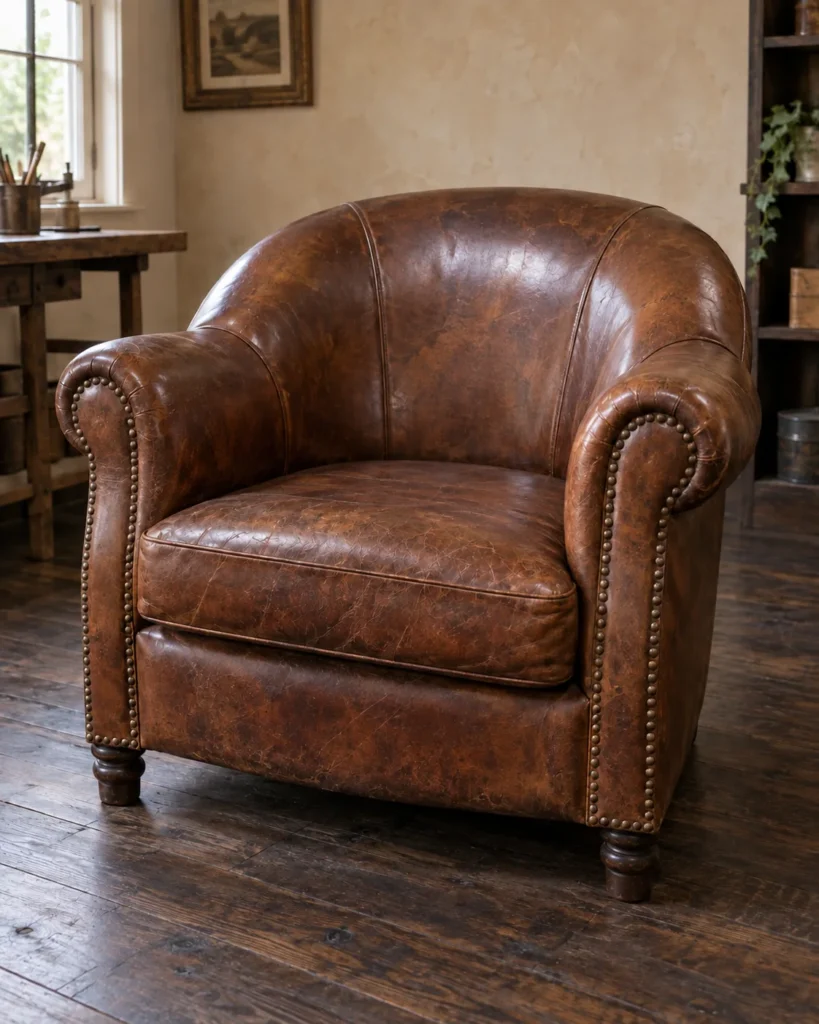 BeforeAfter
A split across the seat, supported underneath; the old leather stayed.
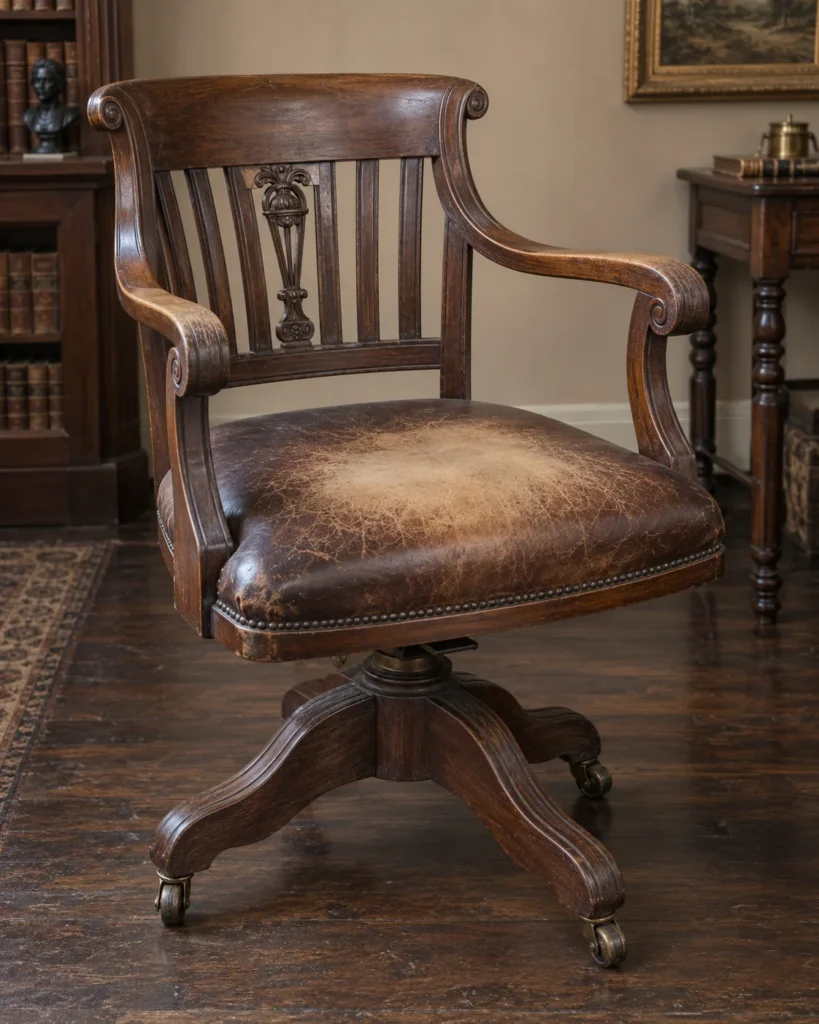
 BeforeAfter
Patchy fading evened out by hand, honest wear kept on the edges.
Both restored by our New York team at Leather Restore Pro headquarters; Chicago pieces get the same method.
The old surface is history a buyer can see.
Color is brushed in only where wear has taken it.
Original hardware goes back where it came from.
New leather is a last resort, and we spell out its effect on price.
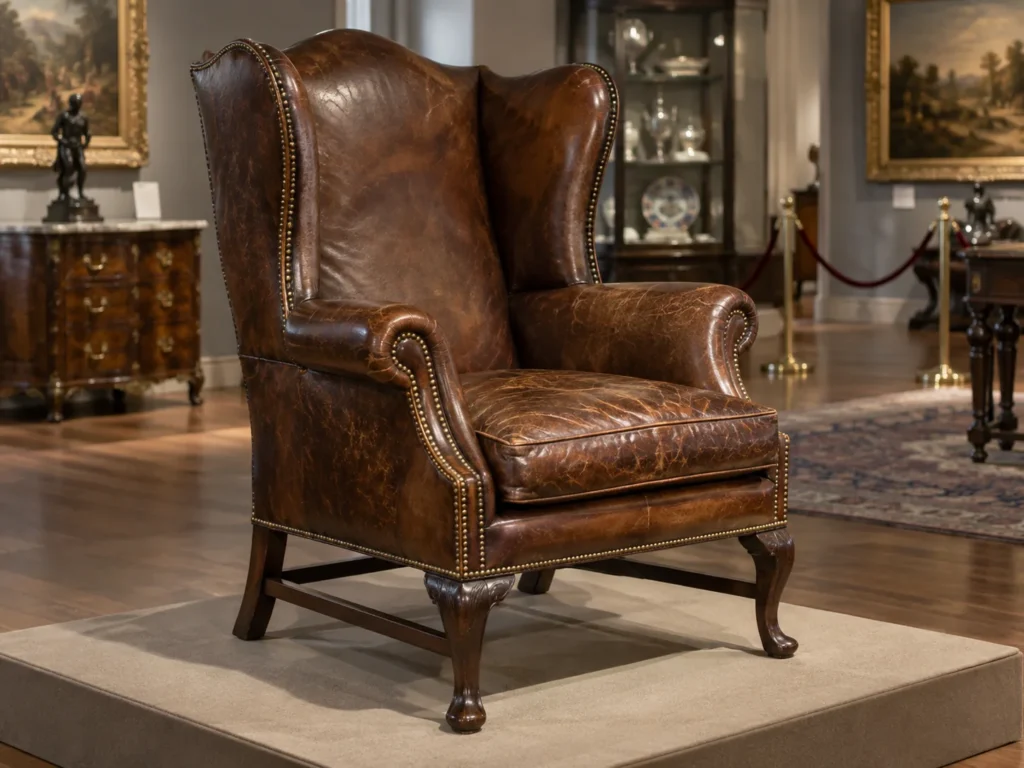
Most dealers send us a photo before they bid. We tell you what the piece needs and what it will take.
One piece from a booth or a whole estate. When the original hide is gone, a period-suitable re-cover is priced so you can weigh it against value.
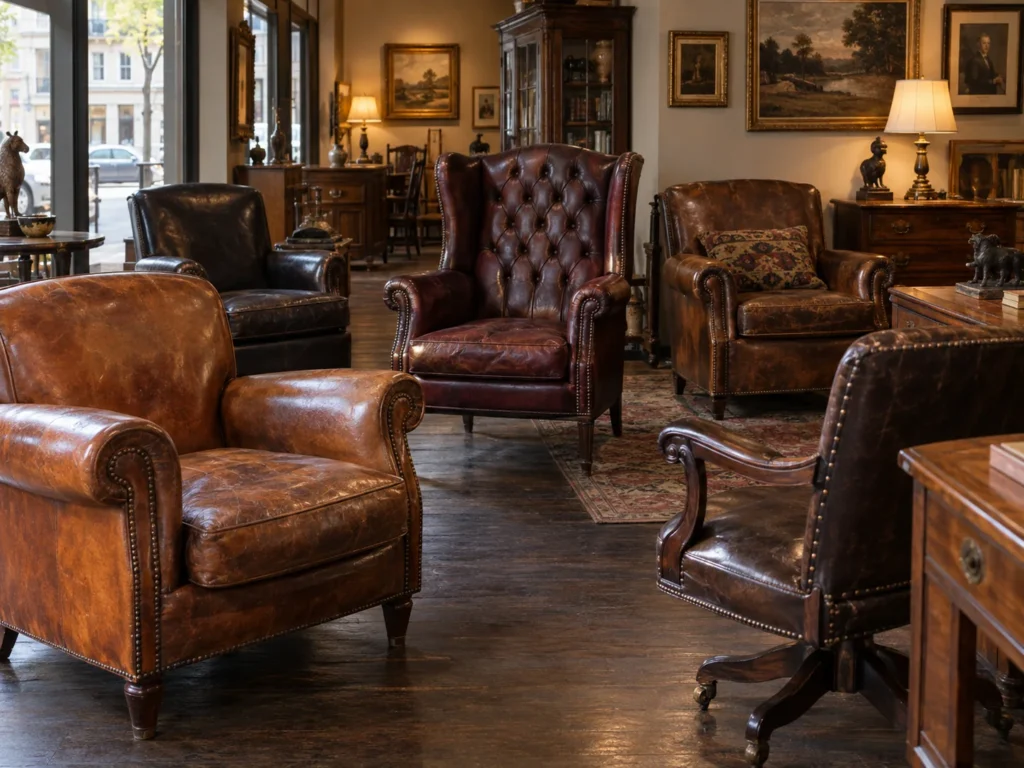
Pieces we restore
Restoring a family piece rather than stock? See antique leather furniture for private owners.
Send PhotosA piece that is sound, clean and evenly colored, that still reads as its age. Making it look new is the wrong goal for stock.
Heavy-handed work can. Keeping the old leather, hardware and patina tends to make stock move faster, not slower.
We can stop it getting worse. Red rot turns old vegetable-tanned leather to powder; consolidation stabilizes it, though nothing brings the fiber back.
Gladly. A couple of photos from the estate sale or the preview are enough for a first opinion and a rough idea of cost.
In most cases. A suitable hide is aged by hand until it blends with the surviving panels. Send photos to office@leatherrestorepro.com or use the form.
Our approach follows the minimal-intervention principle set out by the American Institute for Conservation.
Send photographs of the piece, wide and close. You get a condition note and a written price.